
How MEE coordinated field testing across 21 buildings to identify steam, controls, and operational improvements
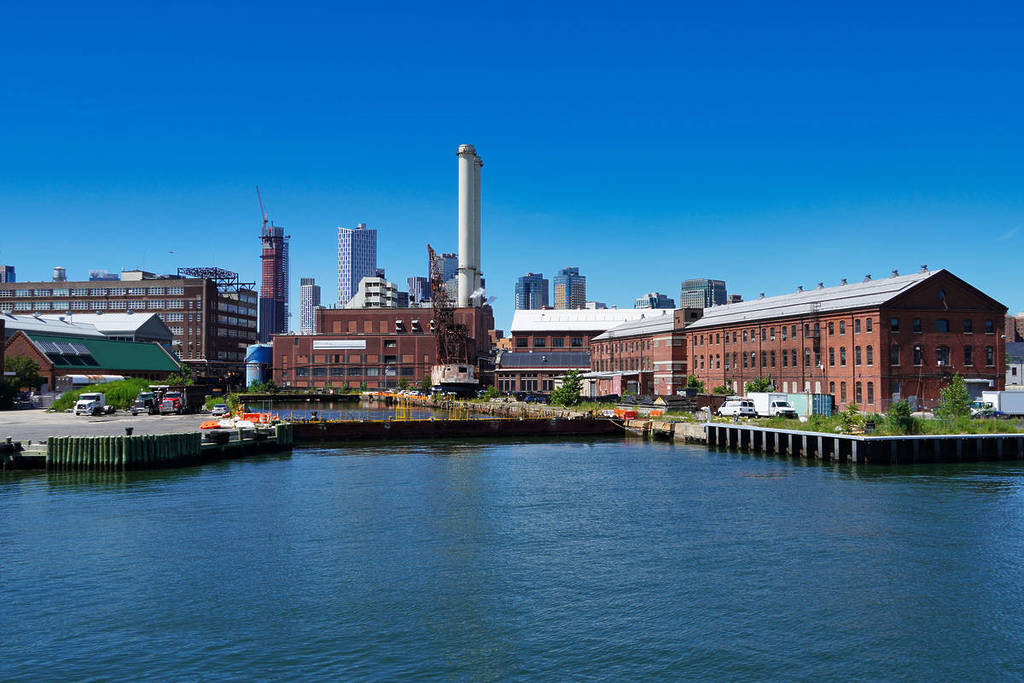
The Brooklyn Navy Yard is not a conventional commercial campus. It is a working industrial district with more than two centuries of history, multiple generations of buildings, varied tenant uses, and utility systems that must serve a dense waterfront property without interrupting daily operations.
In 2025, Mayflower Energy Engineering worked in partnership with SOCOTEC US to perform an extensive retro-commissioning effort for the Brooklyn Navy Yard Development Corporation. MEE’s assignment covered 21 buildings totaling approximately 2,647,000 square feet—about 44 percent of the Yard’s more than 6 million square feet of building space.
The work required more than reviewing equipment lists and control drawings. MEE’s team had to understand how a central steam system, building-level pressure controls, steam traps, hydronic systems, ventilation equipment, building-management systems, and operating staff interacted across a historically complex industrial campus.
A Historic Industrial Campus Still Serving New York City
Established in 1801, the Brooklyn Navy Yard served as one of the nation’s premier naval shipbuilding facilities for 165 years. Ships associated with the Yard include the USS Monitor, USS Arizona, and USS Missouri. During World War II, approximately 70,000 people worked at the site. The Navy decommissioned the Yard in 1966, and New York City subsequently repositioned it as an industrial park.
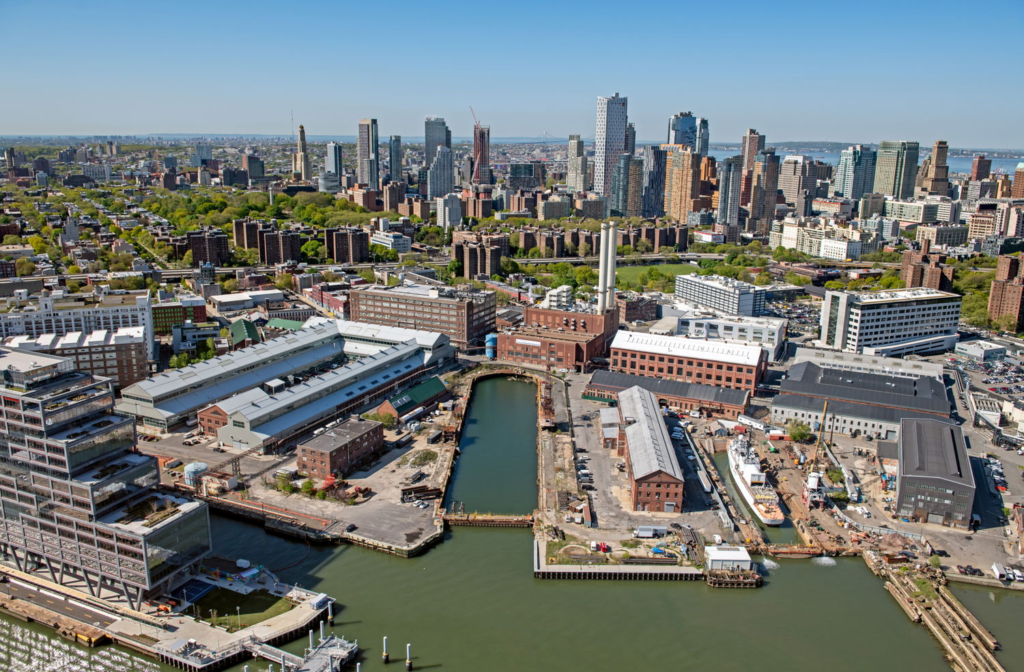
Today, the Yard is a 300-acre waterfront industrial campus managed by the Brooklyn Navy Yard Development Corporation on behalf of the City of New York. It contains more than 6 million square feet of building space and approximately 60 manufacturing buildings. The campus is home to more than 550 businesses and over 13,000 workers, representing industries that range from traditional manufacturing and fabrication to design, technology, media, and advanced production.
That scale and diversity are central to the commissioning challenge. The Yard is not one building with one operating schedule or one set of systems. It is a collection of facilities constructed, renovated, subdivided, and repurposed during different periods—while remaining an active center of employment and industrial production.
The MEE and SOCOTEC Project Team
Brooklyn Navy Yard Development Corporation requested assistance with its Local Law 87 energy-audit and retro-commissioning requirements in February 2025. The project proceeded under the NYSERDA FlexTech Program, with MEE serving as a subcontractor to SOCOTEC US.
SOCOTEC provides energy audits, retro-commissioning, commissioning, compliance, and broader building-performance services. For this assignment, the partnership combined SOCOTEC’s project role with MEE’s field-based retro-commissioning, controls review, steam-system testing, issue development, and coordination with Yard operations.
MEE planned and executed the retro-commissioning work between March and July 2025. The resulting scope included:
- 21 buildings
- Approximately 2,647,000 square feet
- 16 coordinated site visits
- 37 identified retro-commissioning issues requiring resolution or follow-up
- Weekly progress reporting to facility operations staff
- Testing and analysis of steam, heating, cooling, ventilation, controls, envelope, and related energy systems
The covered portfolio was itself comparable in size to a substantial urban campus. Buildings 77 and 127 included building-management systems that allowed MEE to review historical trend data. Other facilities required greater reliance on direct field observations, temporary instrumentation, equipment testing, operator interviews, and comparisons between intended and actual operation.
Why the Yard’s Steam System Required Detailed Investigation
The Brooklyn Navy Yard uses a central steam plant and distribution network to serve multiple buildings. A campus steam system can be efficient and durable, but its performance depends on the entire chain—from generation and distribution to pressure reduction, heat transfer, condensate management, steam traps, insulation, and building-level controls.
Problems at one point in that chain can affect other buildings or be hidden by the apparent availability of heat. Excessive pressure may mask distribution deficiencies. Failed-open steam traps can waste steam without creating an obvious comfort complaint. Failed-closed traps can prevent equipment from heating correctly. Missing insulation increases distribution losses. Poor condensate removal can cause noise, unstable control, corrosion, or water hammer. A control valve or pressure-reducing valve may appear operational while maintaining a pressure much higher than the connected equipment requires.
These conditions make steam retro-commissioning different from a visual inspection. The system must be observed under operating conditions, and the team must distinguish normal temperature patterns from leakage, bypass, failed traps, poor sequencing, and pressure-related problems.
MEE used thermocouple data loggers to evaluate steam-system operation over time. Steam traps were assessed with ultrasonic leak detection and thermal imaging, allowing the team to compare sound signatures and upstream/downstream temperatures. The review supported two particularly important operational recommendations:
- Establish a systematic steam-trap maintenance plan
- Reduce pressure-reducing-valve steam pressure from 12 psig to 4 psig where supported by the connected building requirements
The maintenance plan was important because steam traps are not a one-time repair item. Their operating condition changes with use, contamination, pressure, and age. A repeatable inspection, documentation, and repair process helps preserve savings after the retro-commissioning project ends.
Coordinating Work Across Three Maintenance Teams
Technical access was only one part of the challenge. The Yard operates with three distinct maintenance teams responsible for different areas and systems. MEE therefore had to coordinate building access, equipment availability, operating knowledge, and testing windows with multiple groups while respecting tenant activities and ongoing facility work.
MEE organized the 16 site visits around the Yard’s operating zones. Buildings in the same zone were grouped so that the team could perform comparable testing during the same visit and reduce repeated demands on operations personnel. Weekly progress updates kept the Yard informed about completed work, remaining access needs, preliminary findings, and questions requiring operator input.
This coordination improved more than scheduling. Facility staff often hold critical knowledge that does not appear in drawings or control sequences: recurring complaints, valves that must remain in a particular position, equipment that operates only under certain weather conditions, and prior repairs that changed the original design. By working with the zone managers and maintenance teams, MEE could compare documented intent with actual operating practice.
Finding Problems That Routine Operation Did Not Reveal
Many energy problems remain hidden because the affected equipment continues to provide some level of service. A pump may run, a fan may turn, or a building may maintain temperature while the system uses far more energy than necessary.
MEE’s field testing and trend analysis identified issues involving:
- Steam traps and campus steam distribution
- Pressure-reducing-valve settings
- Heat-recovery wheels
- Chilled-water pump sequences
- Cooling-tower setpoint control
- Hot-water reset sequences
- Pipe insulation
- Building-envelope leakage and air sealing
- Building-management-system schedules, trends, and control behavior
Historical BMS trend logs in Buildings 77 and 127 helped reveal how equipment actually responded over time rather than only at the moment of inspection. In other buildings, temporary logging, ultrasonic testing, infrared imaging, and direct functional checks provided evidence that could be translated into a documented issue log.
The resulting issue log gave BNYDC a prioritized record of observed conditions, expected corrective actions, and potential energy or operational impact. MEE identified 37 outstanding retro-commissioning issues and continued working with Yard personnel to support resolution after the field investigation.
Quantified Energy and Cost-Saving Opportunities
For the 21-building portfolio, MEE calculated that resolving the identified issues could save approximately:
- 3,177,000 pounds of district steam per year
- 146,000 kWh of electricity per year
- $125,200 in annual operating costs
MEE also projected that implementing the ongoing steam-trap maintenance plan could save approximately $12,900 per year. Presented together, the documented issue-resolution opportunities and continuing steam-trap maintenance benefit represent approximately $138,100 in potential annual operating-cost savings.
The value extends beyond utility savings. Correct steam pressures, functioning traps, stable hydronic sequences, effective heat recovery, and accurate controls can reduce equipment stress, improve comfort, make system behavior easier to diagnose, and help maintenance staff direct limited resources toward verified problems.
What This Project Demonstrates About Campus Retro-Commissioning
Large industrial campuses rarely offer a uniform set of systems or simple access. The most useful retro-commissioning work combines engineering analysis with careful field testing and close coordination with the people who operate the site.
At the Brooklyn Navy Yard, MEE’s team coordinated across three maintenance groups, tested 21 buildings over 16 site visits, evaluated a central steam-distribution system, reviewed building controls, and translated hidden operational problems into a structured list of corrective actions and quantified savings.
The project demonstrates that retro-commissioning is not limited to correcting obvious equipment failures. Its greater value is often found in revealing how systems interact, documenting conditions that routine maintenance may not expose, and giving an owner a practical path from investigation to implementation and verification.
Mayflower Energy Engineering provides commissioning, retro-commissioning, and performance-verification services for complex existing buildings and multi-building portfolios. MEE also supports owners through energy engineering and building-performance analysis, corrective-action development, implementation oversight, and verification of completed work.
Contact Mayflower Energy Engineering to discuss retro-commissioning, Local Law 87 compliance, or performance improvements for an individual building or campus portfolio.