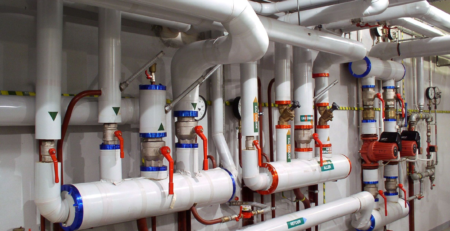

How radiator vents, steam pressure, and main venting affect one-pipe steam heating
Perhaps the most common question I get from apartment dwellers in NYC is “what is that hissing noise?”
The “hissing noise” that you hear in a one-pipe steam-heated space is the air vent letting air out of the radiator or pipe. And it’s important that the air gets let out of the radiator. Otherwise, the radiator would never get hot.
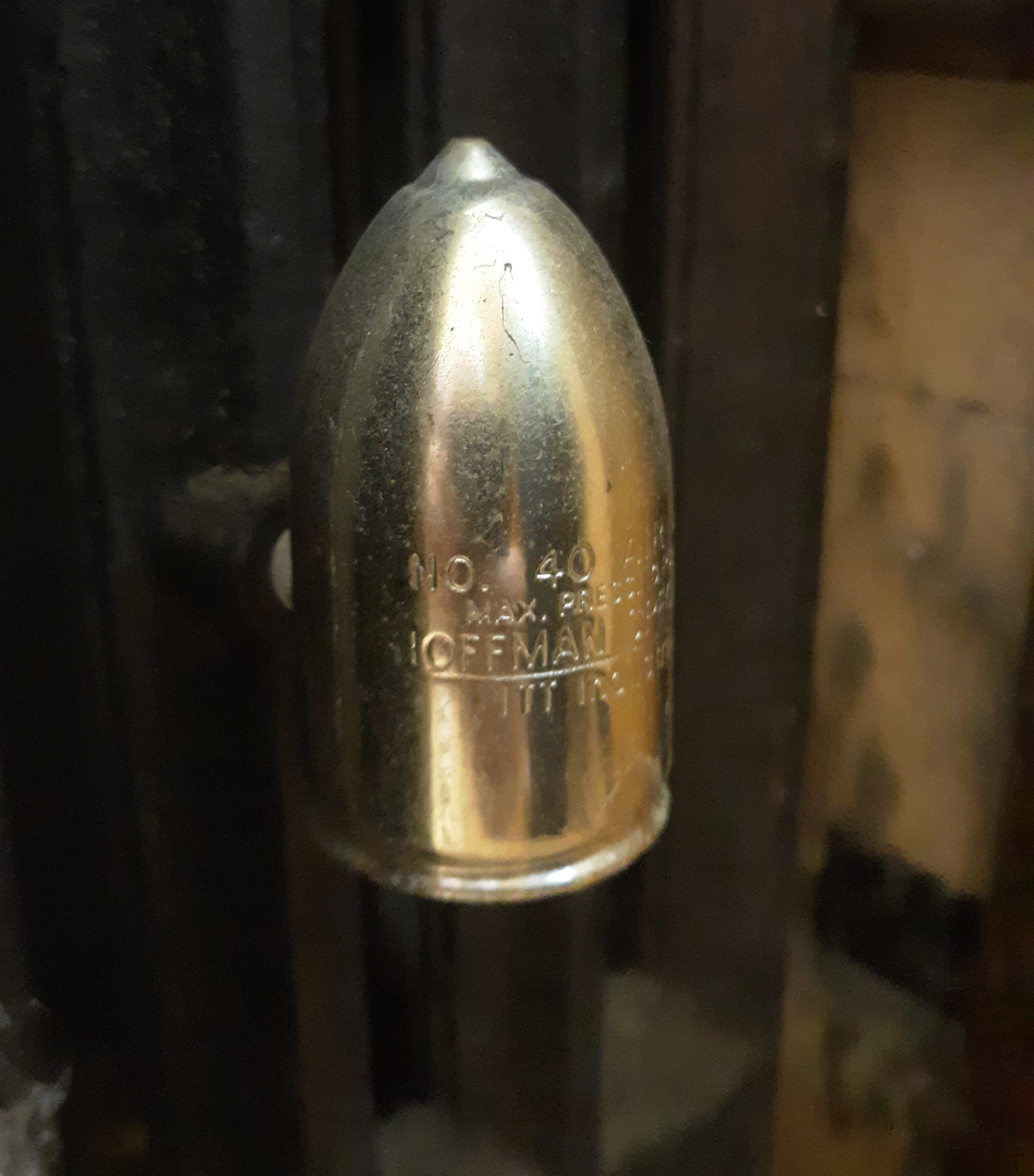
Let’s look at a pretty standard air vent for a radiator, a Hoffman 40:
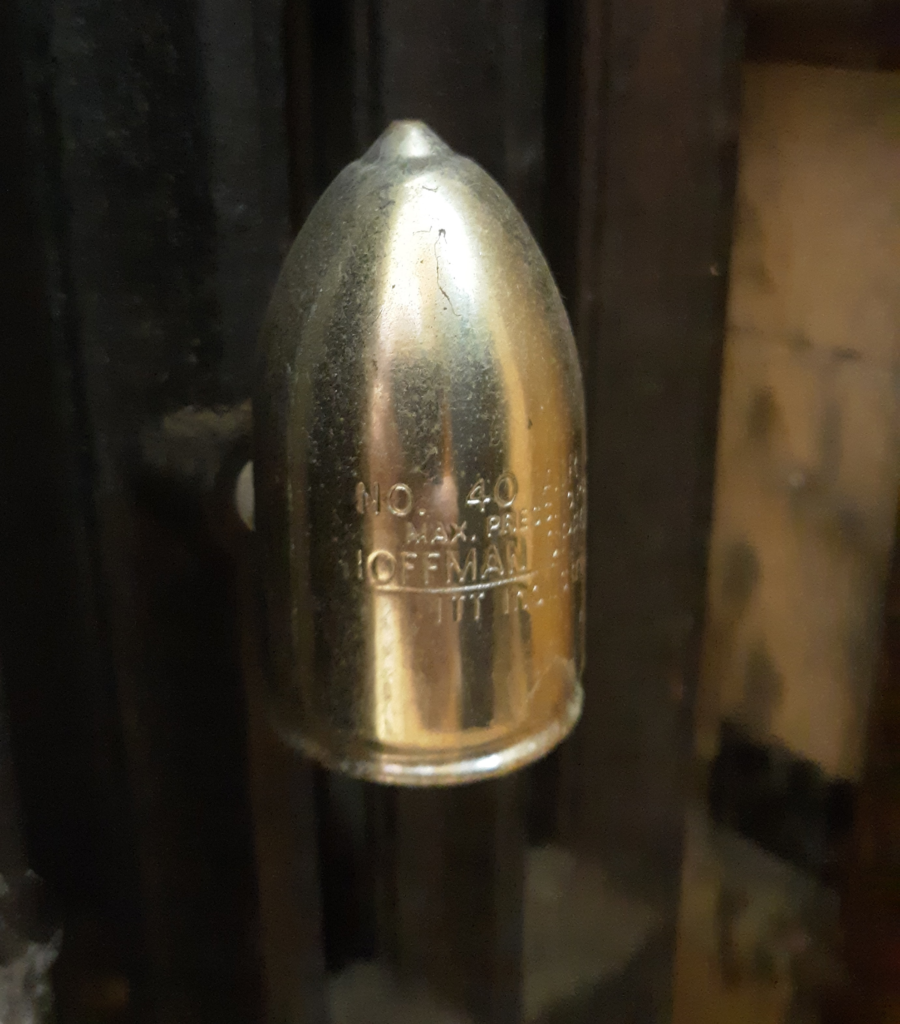
You can see “Hoffman 40” etched on the air vent in the photo. Inside the Hoffman 40 is a smaller vessel with an alcohol-water mixture that boils at a point below the normal boiling point of water. This vessel is commonly referred to as the “float” in the air vent. So when steam comes into contact with the float, the alcohol-water mixture will boil, and a diaphragm at the bottom of the float will “pop out” (think thermal expansion) and close the seat that allows the air to keep going through the opening. At this point, the hissing will suddenly slow down and stop within a matter of seconds. And if the air vent was installed in the right location on the radiator, the radiator will be completely full of steam, or as I like to say, “energized with steam.”
And it will usually stay that way until the steam that is in the radiator has given up its heat to the surroundings and has started to condense back into liquid water. Eventually, the alcohol-water mixture inside the float will turn back into its liquid state, and the air vent will reopen.
This happens only when the pressure acting on the vent has fallen below the rated “drop-away” pressure of the air vent. For a Hoffman 40 air vent like the one in the image above, this rating is 6 psig. This means that if you maintain a steam pressure above 6 psig, then the air vent may not “drop away” after the first steam cycle, and therefore the air vent will be unable to “take a breath” to return to its initial position. If the steam pressure at the air vent stays above the drop-away pressure, the radiator won’t be able to fill with steam until the air vent can take a breath. In other words, it will stay cold, and cranking up the steam pressure will only make the problem worse.
All the more reason to lower your operating pressure at the boiler pressuretrols to around 1-2 psig.
One of the reasons why a lot of building operators crank their pressuretrol setting up to 4 or 5 psig is because they do not have adequate main loop venting, and the operator has to somehow force the boiler to run for a longer cycle to allow enough time for the air in the system to vent before everything gets energized. And setting the pressuretrols higher will force the boilers to run longer. Retro-commissioning agents performing Local Law 87 work must perform a “time taken to pressurize” test on one-pipe systems, which is geared toward ensuring that the system is adequately vented.
A main loop air vent is typically much larger than the little radiator air vent (Hoffman 40) we looked at above. The venting capacity of a main loop vent is often 10x-20x what you see coming out of a radiator vent, and these vents need to be sized based on the amount of air that is in the piping leading up to the main loop vent location. The most common main loop air vents that I’ve seen are Gorton #2 and Gorton #1. The Gorton #2 is the largest commercially available air vent I’ve seen in the field, boasting an orifice diameter of 1/8″! If you have a large amount of air in the steam main with no venting, all of the air is being forced out of the little radiator vents throughout the building. Adding a main vent will not only allow you to reduce your pressuretrol settings to the 2 psi standard (which will save energy), but it will also reduce the time it takes for every radiator to energize with steam.
This is why Local Law 87 retro-commissioning includes a requirement that the cutout pressure of the operating pressuretrol be set no higher than 4 psig unless design documentation shows the need for a higher steam pressure. The DOB’s rationale for this is that running your steam system at a higher pressure is worse for energy efficiency and will start creating operational issues. Remember, the Hoffman 40 needs the system to fall below 6 psig to “take a breath,” and the further you raise your pressure, the longer your boiler cycle becomes. Getting close to the “2 psig standard” is typically best for the system, and it’s best for the owner and occupants as well.
Need Help Balancing Your Steam System?
Uneven heating, noisy radiator vents, and excessive steam pressure can indicate broader distribution problems. MEE’s team has the technical expertise to investigate one-pipe steam systems, identify the causes of distribution imbalances, and recommend practical improvements to main venting, radiator venting, controls, and operating pressure. Contact MEE to discuss how we can help improve comfort, efficiency, and steam distribution throughout your building.